
Our History
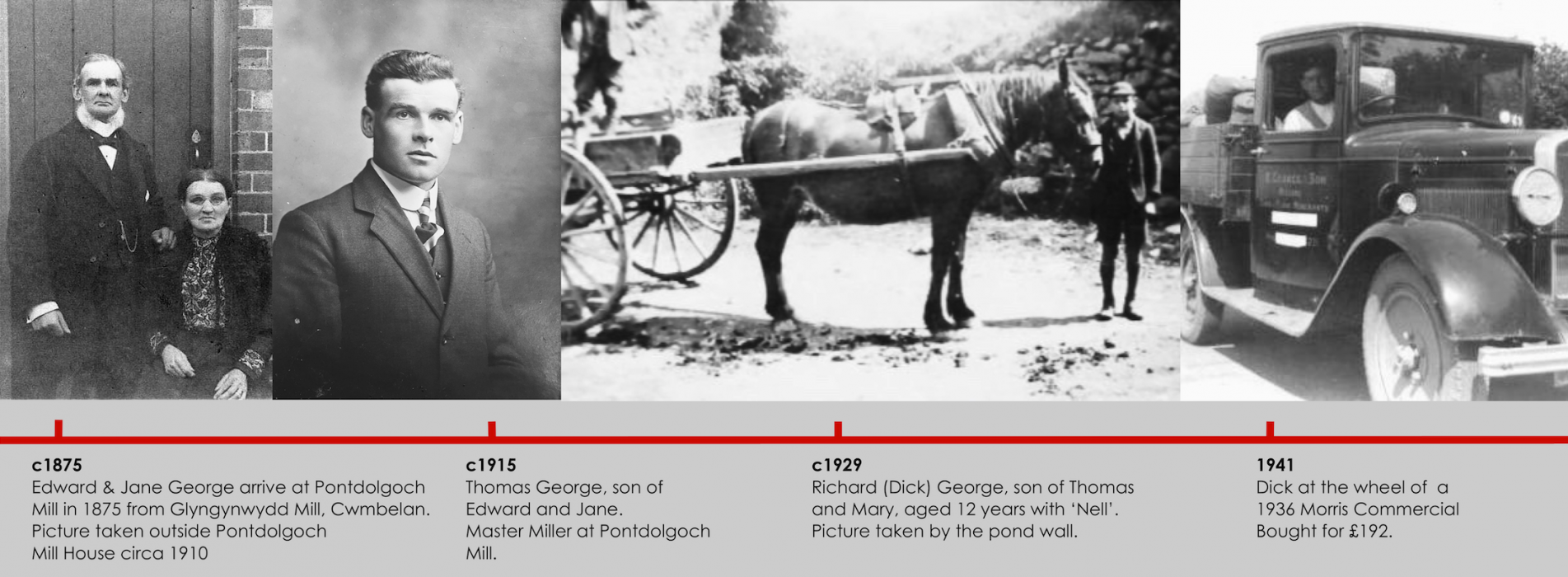
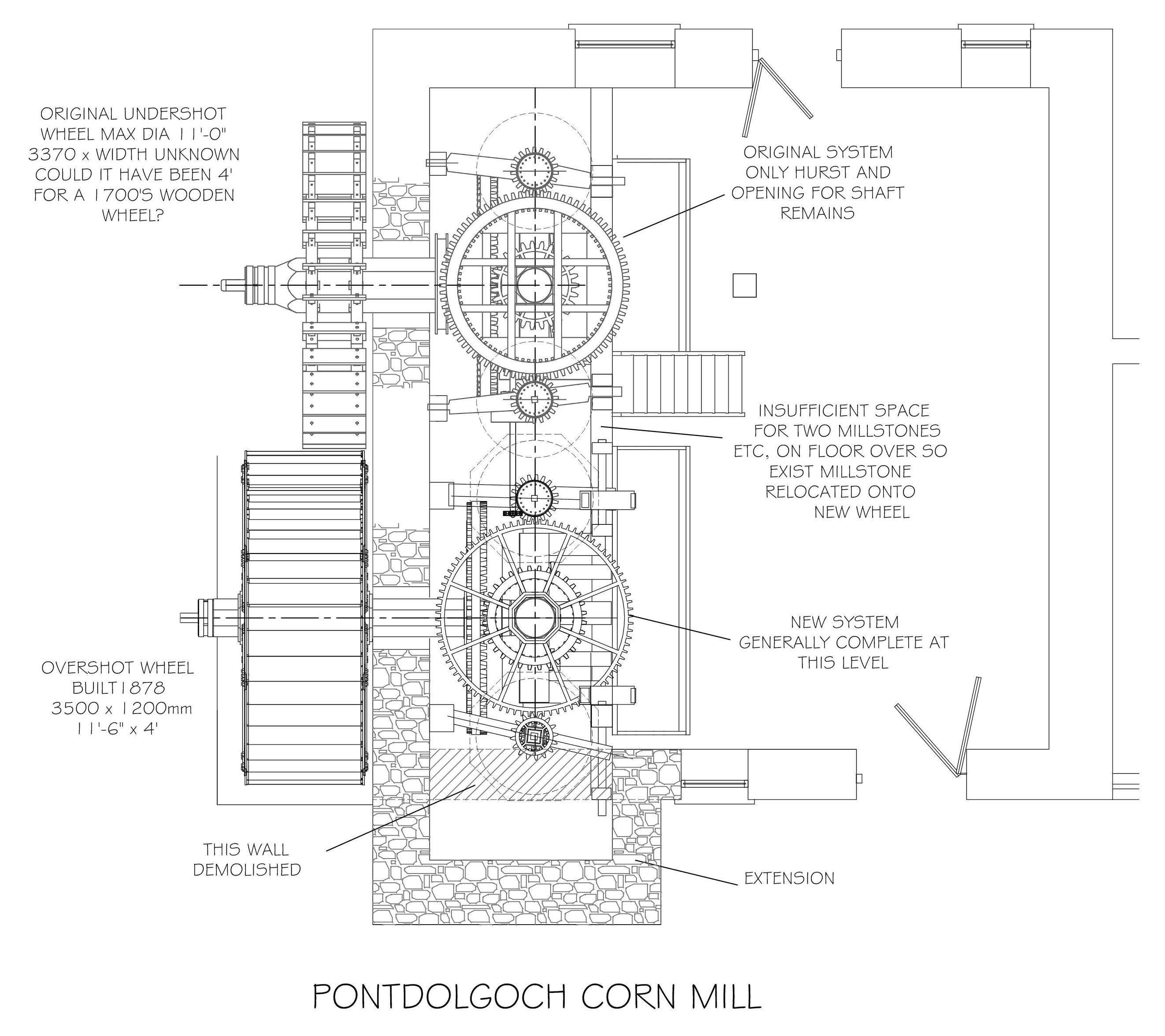
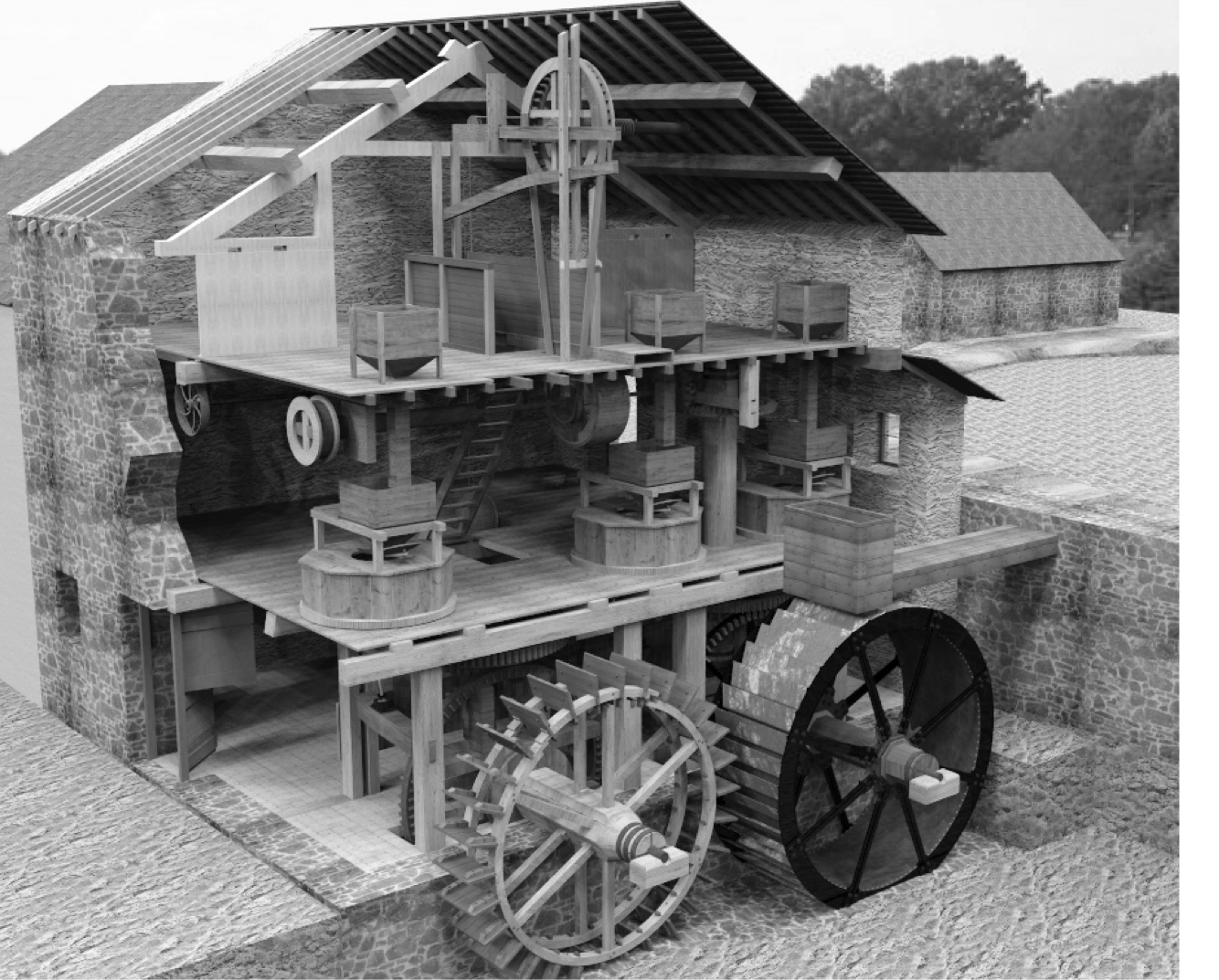
Approximately in 1640, Pontdolgoch corn mill was constructed by skilled craftsmen from the natural materials that were available at the time, including river stone, quarried stone, slate and oak timbers. The original construction remains today housing a compliment of grindstones, cog wheels, timber shafts, pulleys and hoppers. The three storey building that once boasted a double waterwheel and four main grindstones has been run and maintained by the George family since 1875, and was the last working corn mill in Montgomeryshire.
Edward George carried out the skilful business of grinding corn by stones for flour production when he took over the mill and farm premises in 1875. Edward had served his apprenticeship and learned the skills of milling from his father, who was also Edward George and a master miller at Glyngynwedd Mill, Cwmbelan, Near Llanidloes, Powys since 1838.
During the late 1880's and the early 1900's, times were very lean in agriculture. Very little money circulated and families survived by subsistence. Through this period farmers brought their corn to the mill to be ground, turning it into feed for their animals. Few farmers were able to pay for this service but no one was turned away so feed was left behind as payment in kind. More pigs were kept at the Mill at this time so as to utilise the feed and eventually sell the mature pigs converting them into money for services rendered.
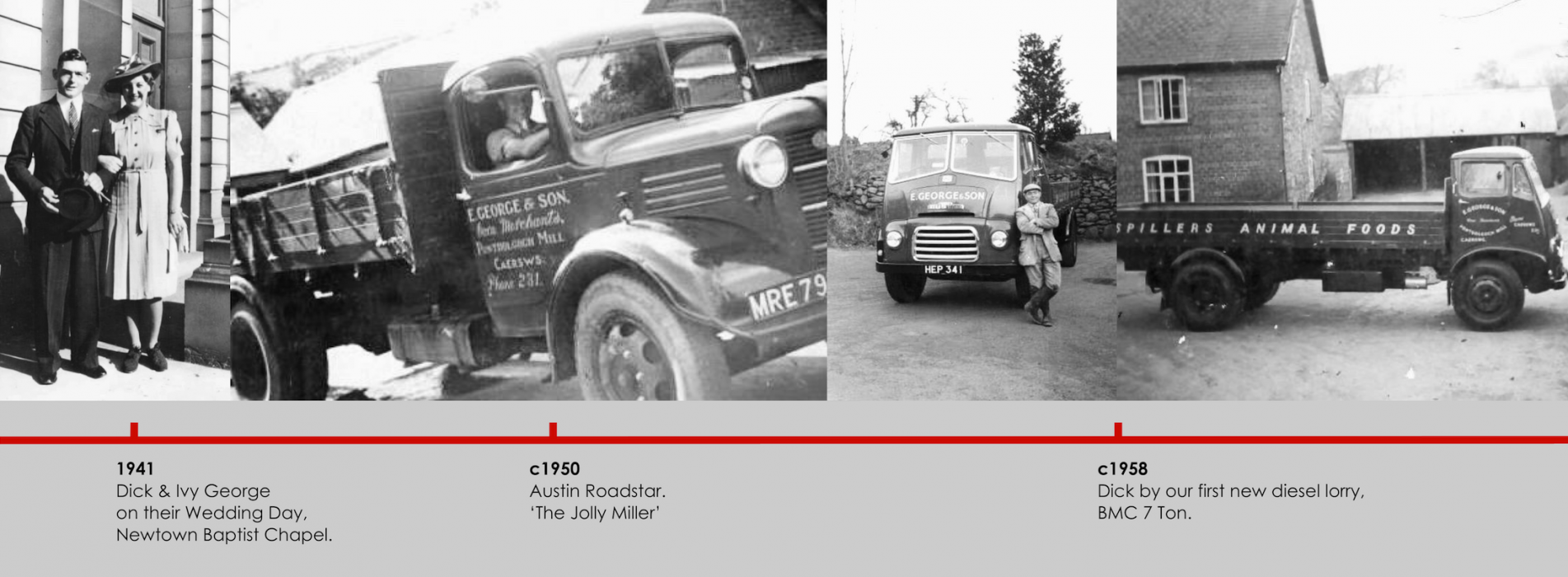
The post war period in agriculture saw dramatic changes when the government of the day introduced new food producing policies and grant aid systems for farmers to produce better and cheaper food. The policies determined new methods of animal feed manufacture and sudden changes took place. Milling corn with stones became old fashioned and many water mills became redundant in the 1950's. Concentrated animal feeds were introduced at Pontdolgoch Mill very soon, and the old mill was employed only to produce kibble (rough ground and bruised cereal). Demand for compound feed, fertiliser and lime had increased dramatically.
Although none of the 5th generation of the family of millers ever reached the status of master millers, they were to be the last generation of the family to understand the workings of the mill, the way of life and the respect and responsibility it commanded. The water wheel turned for the last time in 1962.
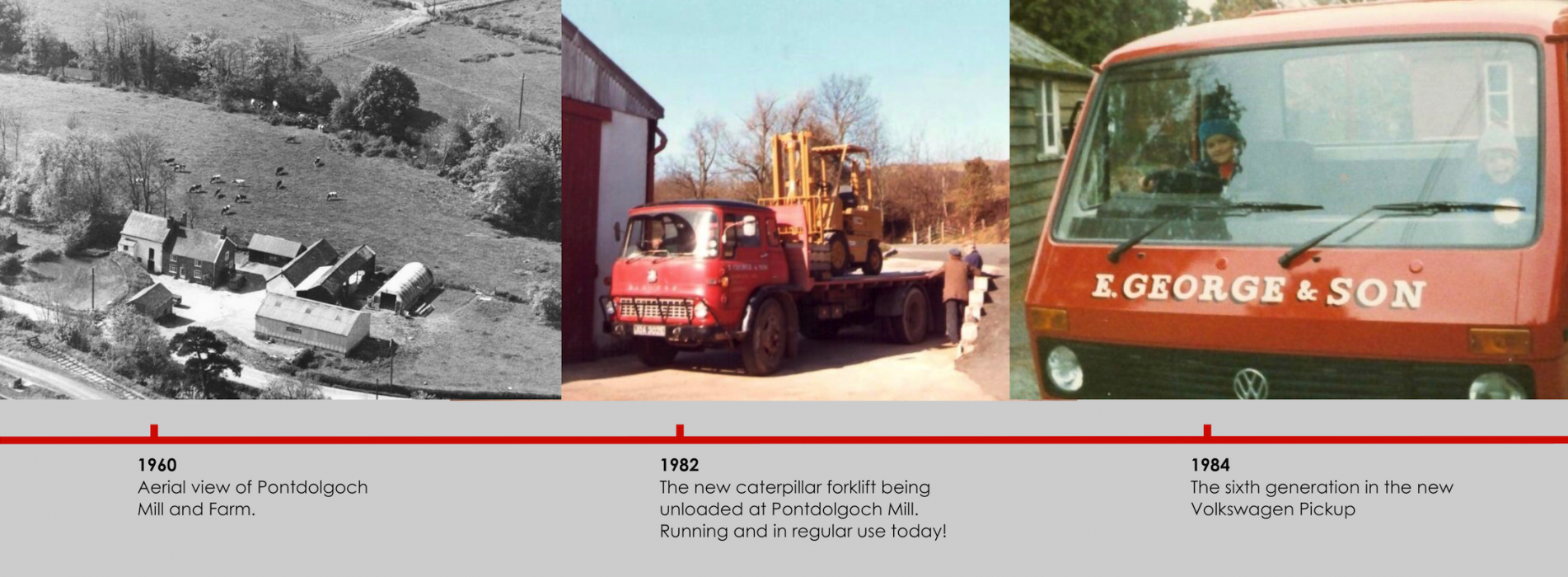
In 1974 Les George returned home to join the business. In 1975 a new shop premises was opened which provided many animal health and husbandry products. These products were in demand for the ever-increasing intensive farming methods. Farmers were able to increase and maintain high levels of livestock and double the amount of food produced per acre. New offices were built in 1986 and a computer system was installed to cope with the demands of a modern business.
Over the past 30 years, the agricultural industry has experienced the many political and financial changes and crisis such as BSE and Foot and Mouth. The wheel of fortune has turned full circle and many farmers have experienced financial challenges, but times are now very different and extra pigs at the mill will not help! The industry demands a new style and for those who take up the challenge and remain involved will see better times ahead.
The animal feed business at Pontdolgoch Mill continues based on the same philosophy and foundation as the old corn mill, and as a new century continues the next generation take on and lend skills that are demanded in a ever-changing agricultural industry.